
Brindisi: Gateway Between Worlds
The Harbor's Ancient Calling
The natural harbor has been recognized as strategically invaluable since antiquity. Under Roman rule, the port was transformed into a crucial departure point for expeditions to the eastern territories. Marble columns marking the terminus of the Via Appia – that legendary highway connecting Rome to the Adriatic – still stand near the waterfront, their weathered surfaces touched by countless hands over two thousand years.
Trade routes radiating from this harbor brought prosperity that could be measured in architectural grandeur. Goods from across the Mediterranean were unloaded onto these docks: Egyptian grain, Greek pottery, spices from distant lands. The city became wealthy not through production but through movement, serving as a critical node in networks that bound the ancient world together.
Things to do in Brindisi
Monuments to Faith and Power
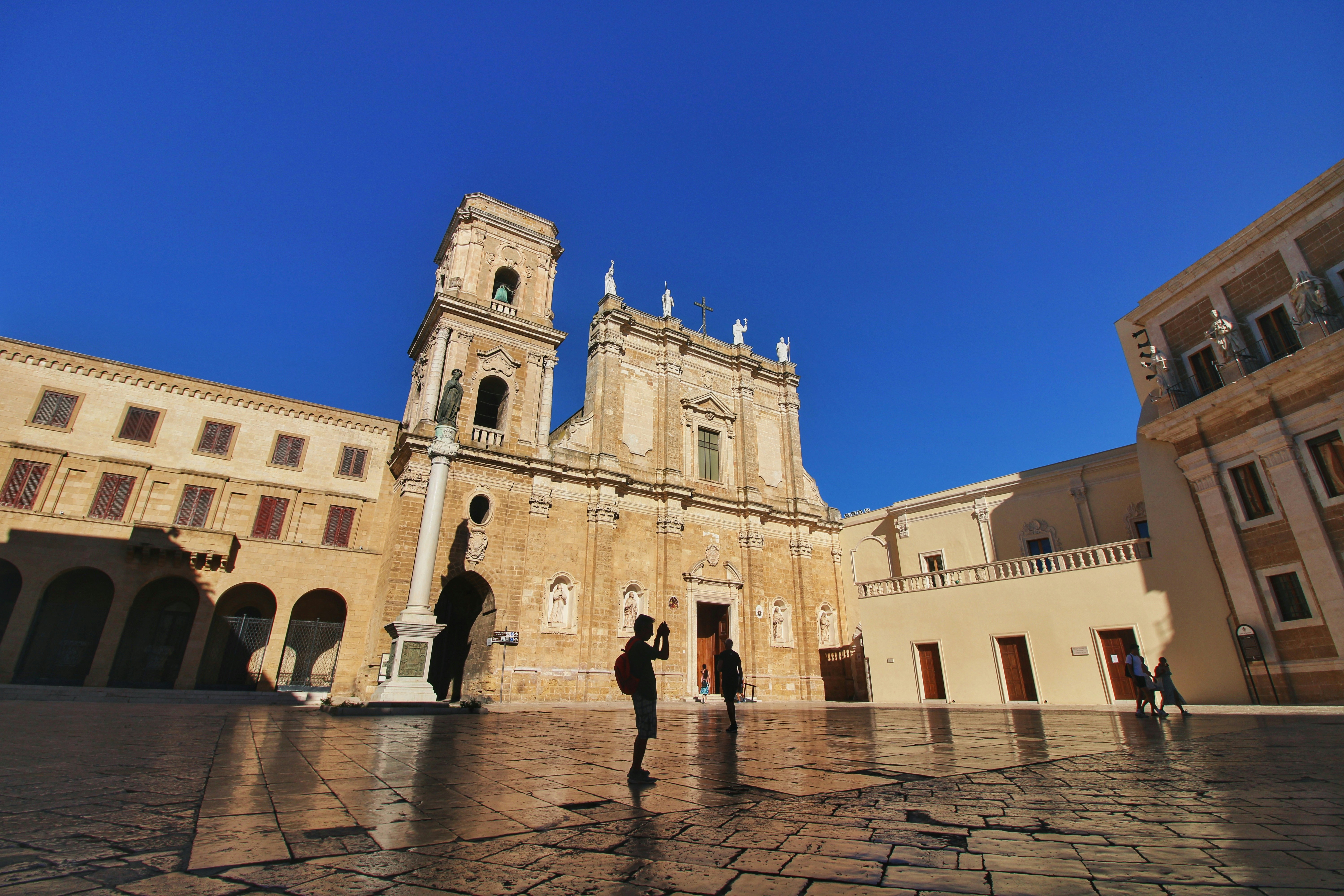
The Romanesque cathedral, constructed in the 11th century, dominates the old town with its understated elegance. Unlike the elaborate baroque facades found elsewhere in Puglia, this house of worship was built with restraint, its beauty revealed through proportion rather than ornamentation. Mosaic floors from the 12th century can still be observed, their intricate patterns having been walked upon by pilgrims heading to the Holy Land.
Nearby, the Swabian Castle stands as testament to the city's medieval importance. Commissioned by Frederick II in the 13th century, this fortress was designed to protect both the harbor and the kingdom's southeastern frontier. Its massive walls, constructed from local limestone, have been weathered by sea winds but remain imposing. The castle has been repurposed over centuries – serving as prison, military barracks, and now cultural venue – demonstrating how historic structures can be adapted rather than abandoned.
Streets Where History Lives
The historic center reveals itself slowly to those willing to wander without agenda. Narrow streets wind between buildings whose foundations date back centuries, though their facades may have been refreshed multiple times. Washing lines stretch between balconies, a reminder that these aren't museum pieces but lived-in spaces where families have made their homes for generations.
In Piazza del Popolo, locals gather in the evening for the passeggiata, that quintessentially Italian ritual of collective strolling. Conversations flow easily, punctuated by laughter and animated gestures. The square has witnessed markets and celebrations, public announcements and private moments, for hundreds of years. Today's gatherings differ in dress and language from those of centuries past, but the fundamental human need for community connection remains unchanged.
Maritime Traditions Endure
The relationship with the sea continues to define local identity. Fishing boats depart before dawn, their crews maintaining practices passed down through families. At the fish market, the day's catch gets displayed on beds of ice – sea bream, octopus, red mullet – their freshness evident in bright eyes and firm flesh. Housewives and restaurant chefs negotiate prices with vendors who know their customers by name.
The waterfront promenade, particularly beautiful at sunset, offers views across the harbor to distant shores. Cargo ships and ferries move in and out with regularity, linking this port to Greece, Albania, and beyond. The maritime economy that sustained the city for millennia hasn't disappeared but evolved, adapting to contemporary commerce while maintaining its essential character.
Flavors of the Land and Sea
Puglian cuisine has been shaped by centuries of necessity and abundance in equal measure. The fertile hinterland produces exceptional vegetables, olive oil of remarkable quality, and wheat that gets transformed into distinctive pasta shapes. Orecchiette – "little ears" – can be found handmade by elderly women in doorways throughout the old town, their practiced fingers shaping dough with mesmerizing speed.
Seafood gets prepared simply, allowing natural flavors to speak for themselves. Raw sea urchins might be enjoyed right at the harbor, their briny sweetness requiring nothing more than a squeeze of lemon. Grilled octopus, tender from proper preparation, gets drizzled with local olive oil and scattered with parsley. These dishes don't announce themselves loudly but reward attentive eating.
Wine from local vineyards – particularly the robust Negroamaro and Primitivo varieties – accompanies meals perfectly. These grapes thrive in the intense southern sun, producing wines with character and depth. In family-run trattorias, house wine arrives in unmarked carafes, its quality speaking to the relationship between establishment and vineyard.
Beyond the Tourist Trail
While less internationally famous than other Italian destinations, this relative obscurity has been preserved as something of a gift. Tourism exists but hasn't overwhelmed local culture. Visitors willing to venture beyond the immediate port area find neighborhoods where daily life proceeds according to rhythms established over generations rather than seasonal tourist flows.
The archaeological museum houses artifacts spanning millennia, from Messapian pottery to Roman statuary, displayed in a converted palazzo. Bronze sculptures recovered from the sea floor offer tangible connections to ancient maritime trade. These objects weren't created for museums but for use, worship, or commerce, their presence here an accident of history and the sea's preserving qualities.
Gateway Function Continues
Modern travelers often view the port as merely a transit point – somewhere to pass through en route to Greek islands or Albanian coasts. Ferry schedules get checked more frequently than museum hours. But this functional role has always been part of the city's identity. Rather than resisting its gateway status, the character of this place has been shaped by constant movement, by being a threshold between destinations.
The airport, though modest compared to major hubs, connects to cities across Europe. Low-cost carriers have made the region more accessible, bringing visitors who might previously have overlooked Puglia entirely. This increased connectivity has brought both opportunities and challenges, as local communities work to benefit from tourism without being transformed by it.
Light and Architecture
The quality of light in this part of Italy gets remarked upon by photographers and painters. The southern sun bleaches stone to brilliant white, creating stark contrasts with deep shadows. Late afternoon brings a golden hour that seems to last longer here, bathing baroque facades and ancient columns in warm amber tones.
Architecture reflects centuries of changing tastes and ruling powers. Roman columns stand near medieval churches, which exist alongside rationalist buildings from the Fascist era. Rather than creating visual chaos, these juxtapositions tell the story of a city that has survived by adapting. Nothing gets frozen in time; instead, each era adds its layer to the existing fabric.
The evening ferry to Greece pulls away from the dock as darkness settles over the harbor. Its lights reflect on black water, creating a shimmering path that leads toward distant horizons. Passengers crowd the railings for final views of the receding coastline. Some return regularly, drawn by family connections or professional obligations. Others leave as first-time visitors, already planning return journeys. This constant departure and arrival has been the city's heartbeat since Roman times – a rhythm that shows no sign of stopping. For travelers interested in experiencing similar maritime heritage elsewhere in southern Italy, Naples offers another fascinating perspective on Mediterranean port culture and history.


 Home
Home Wishlist