
Durham: Where Cathedral Stones Tell Stories
A Monument to Faith and Power
The cathedral was begun in 1093, its foundation stones laid with both spiritual devotion and political calculation. Norman bishops understood that divine authority needed earthly expression, and so one of Europe's most ambitious building projects was undertaken on this dramatic riverside site. The massive pillars inside were carved with geometric patterns that had never been seen before – spirals, diamonds, and chevrons that transformed functional columns into works of art.
Construction continued for forty years, yet the vision remained remarkably consistent. The ribbed vault ceiling was pioneering for its time, a technical achievement that would influence cathedral building across Europe. Today, visitors entering through the great north door follow in the footsteps of countless medieval pilgrims, their gaze drawn upward to those same soaring arches that have defied gravity for nine centuries.
Things to do in Durham
The Prince Bishops' Domain
Temporal power was wielded from this hilltop just as firmly as spiritual authority. The Prince Bishops of the diocese were granted exceptional privileges by the crown – they could mint their own coins, raise armies, and administer justice. The castle adjacent to the cathedral served as both fortress and palace, a reminder that the church's influence extended far beyond matters of faith.
These ecclesiastical princes ruled over a vast territory, their jurisdiction stretching from the River Tees to the Scottish border. The Palace Green, that sweep of open ground between cathedral and castle, has witnessed coronations, executions, and the daily pageantry of medieval power. Even today, the sense of authority embedded in these stones hasn't entirely faded.
Sanctuary and Scholar
For centuries, the cathedral offered sanctuary to those fleeing justice or persecution. Two bronze lion-head door knockers – replicas of the medieval originals – mark the point where desperate souls could grasp sanctuary, granted protection under church law. Many stories were written in those anxious moments, though few records of individual cases have survived the passage of time.
The monastic community that served the cathedral maintained one of medieval England's most important libraries. The Lindisfarne Gospels were brought here for safekeeping in the 10th century, and though they've since been moved, their spiritual presence still seems to inhabit the cloisters. Monks spent their days copying manuscripts by candlelight, preserving knowledge through dark ages when learning flickered like a fragile flame.
Academic Tradition
The university was established in 1832, following in the footsteps of England's ancient seats of learning. The castle was transformed from episcopal residence to student accommodation, its Norman halls now home to undergraduates rather than bishops. This transition from religious to academic authority was managed without losing the profound sense of continuity that defines the place.
College buildings were gradually added throughout the city, each contributing to an academic community now numbering over 20,000 students. The collegiate system was modeled on older institutions, creating tight-knit communities within the broader university. Traditions have been maintained with characteristic British determination – formal dinners are still held in candlelit halls, gowns are still worn to examinations.
The River's Embrace
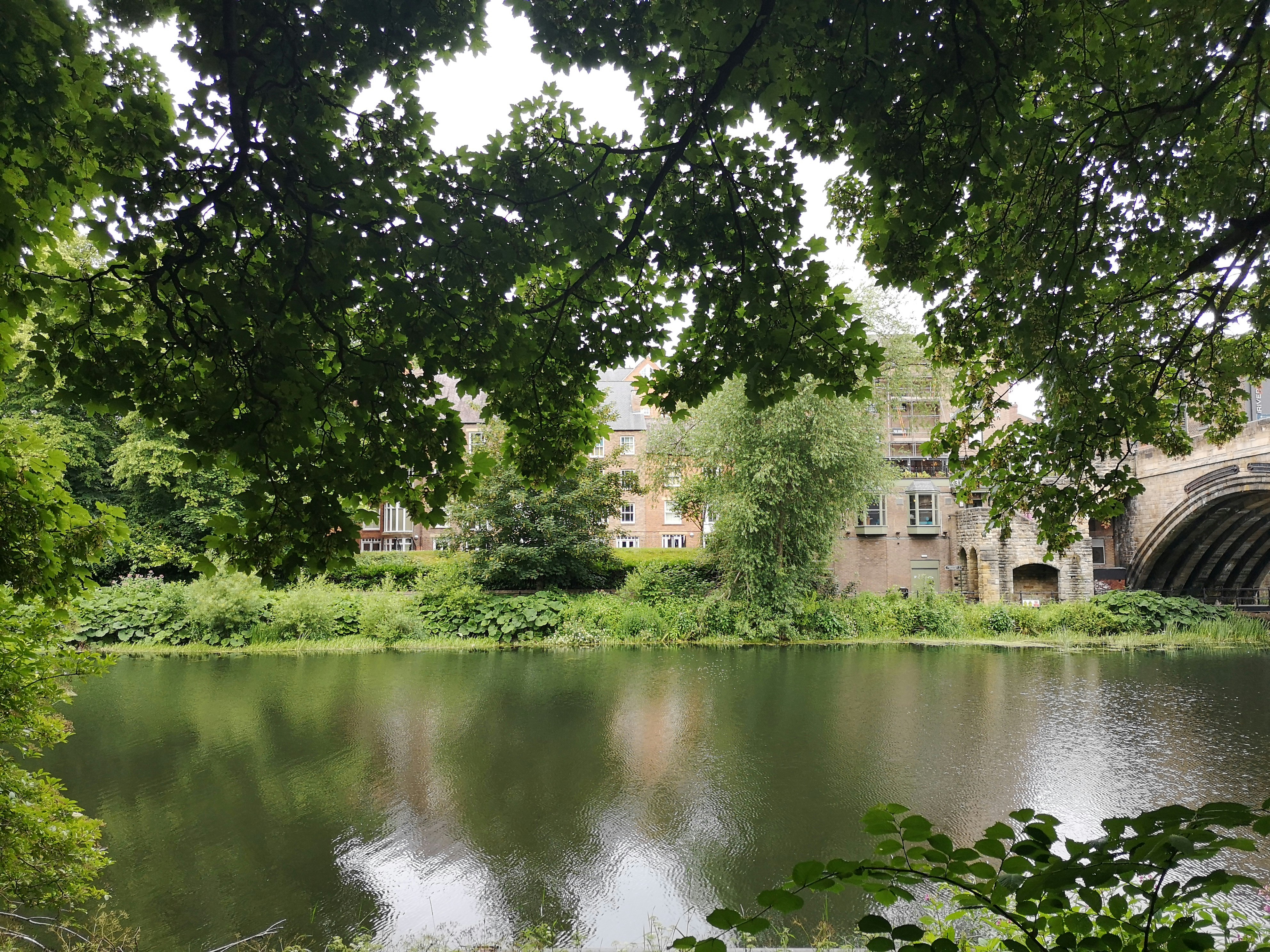
The Wear loops around the cathedral peninsula in a horseshoe bend so dramatic it seems almost designed for the buildings it cradles. The riverbanks were fortified in the Middle Ages, creating a natural moat that made the hilltop virtually impregnable. Today, those same banks provide peaceful walking paths where the cathedral's reflection ripples in the current.
Rowing crews slice through these waters in early morning training sessions, their oars creating rhythmic splashes that echo off stone bridges. The 12th-century Elvet Bridge and the 14th-century Framwellgate Bridge have connected the peninsula to the surrounding settlements for centuries, their weathered arches testament to medieval engineering skill.
A Living Heritage
The cathedral hasn't been frozen in time like some museum piece. Daily services continue to be held, maintaining an unbroken tradition of worship stretching back over nine hundred years. The choir's voices still rise through the nave during evensong, much as they have for generations of monks, priests, and choristers.
UNESCO World Heritage status was granted in 1986, acknowledging the cathedral and castle's outstanding universal value. This recognition brought both pride and responsibility – preservation work must be balanced against the needs of a working church and active university. Stone masons still practice their medieval craft here, replacing weathered blocks using traditional techniques passed down through the centuries.
Market Town Character
Beyond the cathedral close, the city center retains the character of a traditional market town. The Market Place has hosted traders since medieval times, though the goods on offer have certainly evolved. Independent shops occupy buildings where wool merchants and spice traders once conducted business, their storefronts adapted from Georgian and Victorian predecessors.
The Victorian covered market hall provides shelter for stallholders selling everything from fresh produce to vintage books. The smell of freshly baked bread mingles with coffee roasting, creating sensory experiences that connect today's shoppers with countless generations of market-goers before them.
Industrial Echoes
Coal mining shaped the surrounding region's identity for generations, though the cathedral city itself remained relatively untouched by heavy industry. Pit villages spread across the surrounding countryside, their tight-knit communities forged in the difficult conditions underground. The mining museum at nearby Beamish preserves this working heritage, ensuring that stories of those who labored in darkness aren't forgotten.
Railway lines were constructed to transport coal to the coast, cutting through the landscape with Victorian determination. Some of these routes now provide scenic walking and cycling paths, industrial scars transformed into recreational assets. The transition from mining economy to service and knowledge industries was painful for many communities, yet new opportunities have gradually emerged.
Cultural Currents
The arts scene flourishes despite the city's modest size. The Gala Theatre brings performances ranging from touring West End productions to local amateur dramatics. Small galleries showcase both established and emerging artists, their exhibition spaces tucked into converted buildings throughout the historic center.
Music venues cater to diverse tastes, from traditional folk sessions in centuries-old pubs to contemporary bands playing student union halls. The university's concert series brings classical musicians of international caliber to audiences who might otherwise travel to larger cities for such performances. Literature festivals and poetry readings maintain connections to the written word that would have pleased those manuscript-copying monks.
Seasonal Rhythms
The academic year imposes its own rhythm on the city, with quiet summer months giving way to September's influx of students. The Miners' Gala, held each July, brings thousands to the city for a celebration of trade union heritage and working-class solidarity. Brass bands march through streets, banners are paraded with pride, and speeches echo the radical traditions that once made the coalfields a hotbed of political activism.
Christmas transforms the cathedral into a venue for carol services and seasonal concerts. The building was designed to inspire awe in medieval peasants, and modern visitors still feel that same sense of wonder when candlelight flickers across ancient stone during evening services. The cafe culture that has developed in recent decades offers more secular comfort – warm drinks and conversation shared while rain patters against centuries-old windows.
The journey through this compact city reveals layer upon layer of accumulated history, each generation leaving its mark while respecting what came before. Those seeking to explore more of Britain's historic urban landscapes might consider traveling south to York, where Roman foundations and Viking heritage combine to create another compelling destination.


 Home
Home Wishlist