
Notre-Dame de la Garde: Marseille's Spiritual Sentinel
From the azure waters of the Mediterranean to the sun-baked hills of Provence, a city of contrasts unfolds. Marseille, France's vibrant port city, teems with life, culture, and history. Among its many treasures, one stands above all others – quite literally. Perched atop the city's highest point, a golden statue gleams in the southern sun, her arms outstretched in eternal protection. This is Notre-Dame de la Garde, Marseille's beloved "Bonne Mère" (Good Mother), a beacon of faith and a symbol of the city's indomitable spirit.
A Heavenly Vantage Point
As one ascends the winding path to Notre-Dame de la Garde, the breathtaking panorama of Marseille is gradually revealed. The city sprawls below, a tapestry of terracotta roofs, bustling harbors, and sun-drenched islands. The Mediterranean stretches to the horizon, its blue expanse broken only by the silhouettes of distant ships. From this lofty perch, the reasons for the basilica's strategic and spiritual importance become abundantly clear.
Things to do in Marseille
A Legacy of Protection
The site's history as a place of worship and vigilance can be traced back to the 13th century. A small chapel was initially constructed, which was later fortified to serve as a lookout post. Over the centuries, the modest structure was expanded and rebuilt, culminating in the magnificent Neo-Byzantine basilica that stands today. The current church was consecrated in 1864, replacing its predecessors while maintaining the site's dual role as a spiritual sanctuary and a watchful guardian over the city and sea.
Architectural Splendor
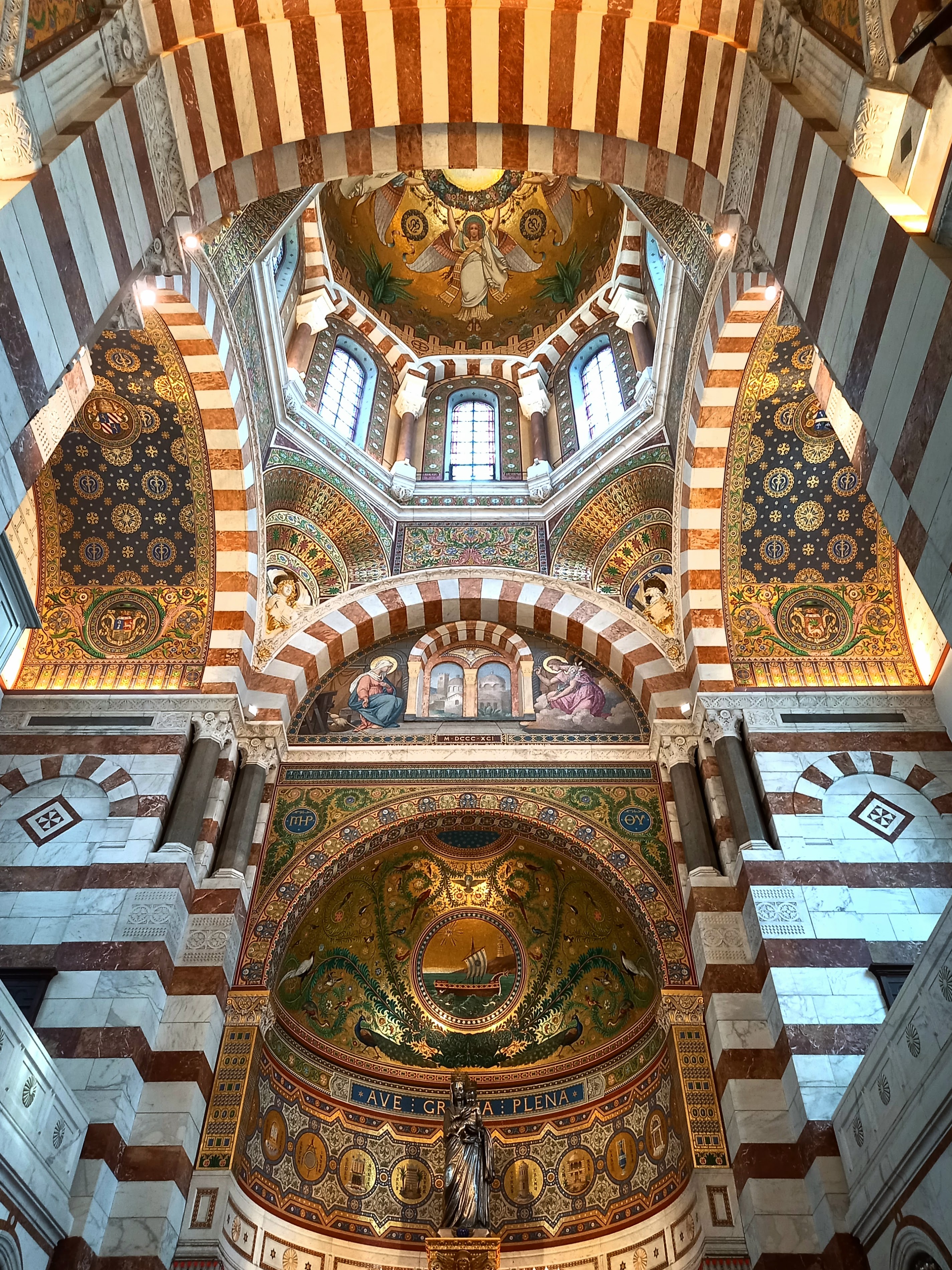
The basilica's striking appearance is owed to its unique blend of Romanesque and Byzantine styles. Two-toned stonework creates a mesmerizing striped effect, while intricate mosaics adorn the interior. The church is divided into a lower crypt and an upper sanctuary, each with its own distinct character. In the upper church, attention is immediately drawn to the ornate altar and the stunning golden mosaics that shimmer in the filtered sunlight.
The Golden Guardian
Atop the bell tower, a colossal statue of the Virgin Mary and Child stands sentinel over Marseille. This 11-meter-high gilded copper statue, affectionately known as "La Bonne Mère," has become an iconic symbol of the city. Her watchful gaze and protective stance have comforted generations of Marseillais, from sailors embarking on perilous voyages to families facing the uncertainties of daily life.
A Tapestry of Faith
Inside the basilica, a fascinating collection of ex-votos is displayed. These offerings, ranging from paintings to model ships and even sports memorabilia, have been left by grateful worshippers over the centuries. Each item tells a story of faith, hope, and perceived divine intervention, creating a touching testament to the deep connection between the people of Marseille and their beloved Notre-Dame de la Garde.
A Witness to History
The basilica has stood as a silent witness to Marseille's tumultuous history. During World War II, it was briefly occupied by German forces before being liberated in a daring operation. Bullet marks on the facade serve as a sobering reminder of those troubled times. Yet, like the resilient city it watches over, Notre-Dame de la Garde has endured, its spirit unbroken.
A Living Monument
Today, Notre-Dame de la Garde remains an active place of worship, drawing both pilgrims and tourists from around the world. Mass is celebrated daily, and major religious festivals see the basilica filled to capacity. Even for non-religious visitors, the site offers a moment of peace and reflection, a chance to connect with the soul of Marseille while gazing out over its stunning vistas.
As the sun sets and the city lights begin to twinkle below, Notre-Dame de la Garde takes on a magical quality. Illuminated against the darkening sky, it stands as a beacon of hope, faith, and the enduring spirit of Marseille. For those seeking to further explore the city's rich cultural tapestry, a visit to the Museum of European and Mediterranean Civilisations is highly recommended, offering a fascinating journey through the region's diverse heritage.
 Home
Home Wishlist