
Where Alpine Majesty Meets Bavarian Soul
Between Mountains and Modernity
The Alps can be glimpsed on the southern horizon, their snow-capped peaks serving as a constant reminder of nature's proximity. This geography has shaped the character of what has become Bavaria's capital – a place where outdoor pursuits get valued as highly as cultural refinement. On any given weekend, bicycles fill the English Garden while art enthusiasts crowd into galleries housing works by masters spanning five centuries.
The city's foundation was laid in 1158 by Henry the Lion, though settlements had existed here for centuries prior. What began as a modest market town on the salt trade route grew into a ducal residence, then a royal capital. Each era left its mark on the urban fabric, creating layers of history that get revealed at every turn.
Things to do in Munich
Architectural Testament
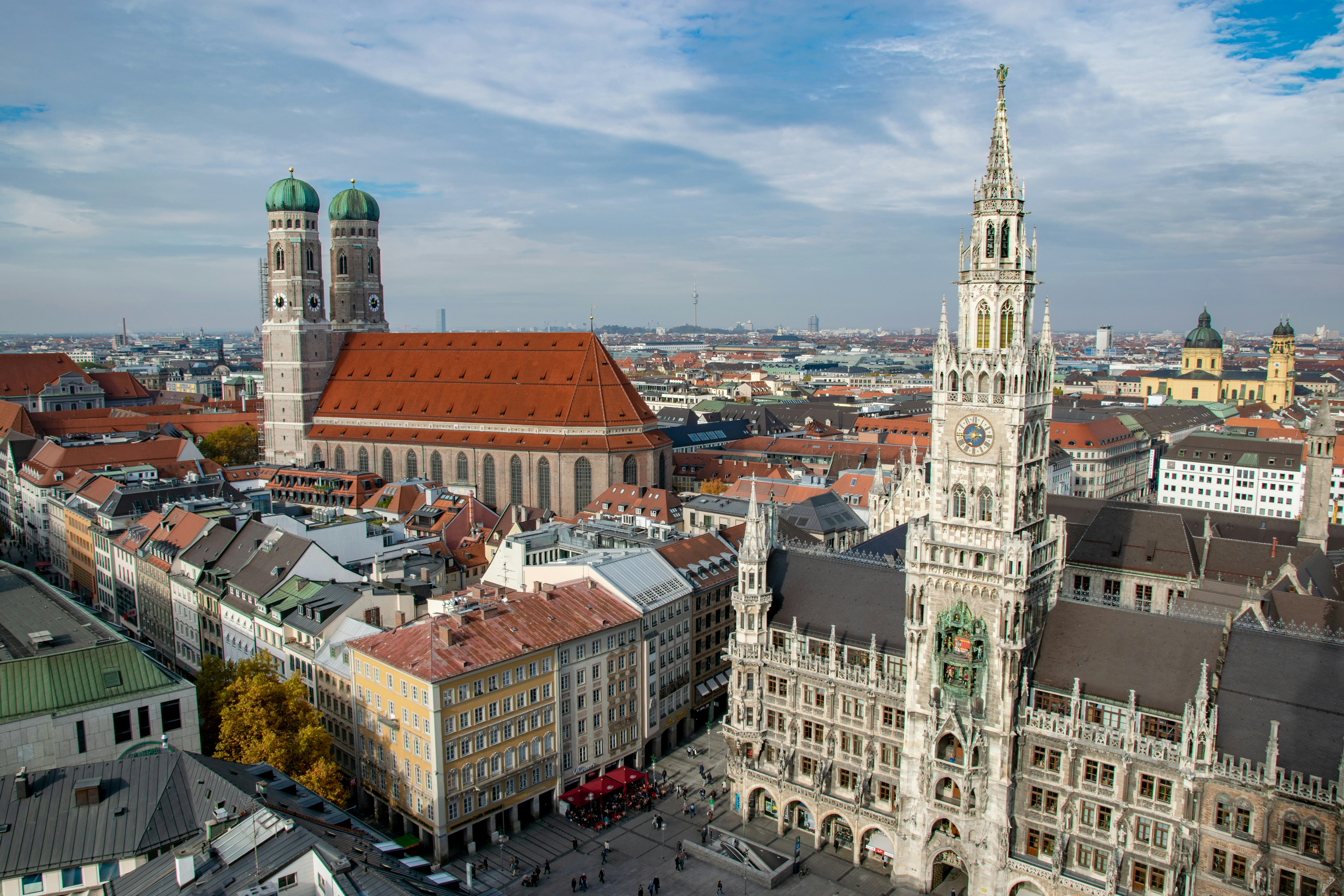
The Frauenkirche's twin onion domes dominate the skyline, their distinctive silhouette recognized around the world. Built in the late 15th century, this brick Gothic cathedral was constructed to accommodate a congregation of 20,000 – a staggering number that speaks to the city's medieval prosperity. Inside, light filters through tall windows onto simple columns, creating an atmosphere of solemn beauty.
A short walk away, the Residenz sprawls across seven courtyards. For four centuries, this palace complex served as the seat of Bavarian rulers, and the opulence accumulated during that time staggers the imagination. Room after room dazzles with baroque and rococo splendor – gilded ceilings, marble floors, and priceless collections of porcelain, silver, and art. The Treasury alone houses ten centuries of royal regalia, from jewel-encrusted crowns to intricate reliquaries.
Yet perhaps the most beloved architectural achievement was created not for royalty but for the people. The Neues Rathaus, completed in 1909, dominates Marienplatz with its neo-Gothic grandeur. Its Glockenspiel, which springs to life daily at 11 am and noon, draws crowds who watch as colorful figures reenact historical scenes to the accompaniment of chiming bells.
Temples of Art and Knowledge
The Alte Pinakothek ranks among the finest art museums anywhere, its collection spanning European painting from the Middle Ages through the 18th century. Works by Dürer, Rubens, and Rembrandt hang in carefully curated galleries, while adjacent buildings house modern masterpieces and contemporary installations. Together, the Kunstareal forms one of Europe's most concentrated cultural districts.
Science and technology get their due at the Deutsches Museum, where interactive exhibits explain everything from mining techniques to space exploration. Founded in 1903, this vast institution sprawls across an island in the Isar River, its collections so extensive that a full exploration would require days. For visitors of all ages, hands-on demonstrations bring complex concepts to life.
Green Sanctuary
The English Garden stretches for miles along the Isar, its meadows and forests providing an escape that feels far removed from urban life. Created in 1789, this park predates even New York's Central Park and covers more ground than London's Hyde Park. On warm days, thousands gather here to sunbathe, play sports, or simply wander beneath ancient trees.
At the park's southern edge, something unexpected catches first-time visitors off guard: surfers riding a standing wave in the Eisbach stream. Year-round, regardless of weather, wetsuit-clad athletes wait their turn to challenge this artificial rapid, their presence a reminder that tradition and unconventionality coexist comfortably here.
Liquid Tradition
Six major breweries operate within the city limits, each producing beer according to the Reinheitsgebot – the purity law enacted in 1516 that restricts ingredients to water, barley, hops, and yeast. Their products get served in cavernous beer halls where strangers become friends over liter mugs and shared tables.
The Hofbräuhaus, founded in 1589, has been welcoming guests for over four centuries. Beneath its vaulted ceilings, brass bands play oompah music while servers in traditional dress navigate crowds bearing impossibly heavy trays. The atmosphere reaches fever pitch during Oktoberfest, when six million visitors descend for 16 days of celebration.
But the city's culinary offerings extend far beyond beer and pretzels. Markets overflow with regional specialties – weisswurst sausages eaten before noon, leberkäse sliced thick and served on crusty rolls, and obatzda, a creamy cheese spread flavored with paprika and onions. At the Viktualienmarkt, vendors have been selling fresh produce, flowers, and delicacies since 1807, their colorful stalls creating a feast for the senses.
Innovation and Industry
Behind its traditional facade beats an economic powerhouse. Global corporations base their headquarters here, from automotive giants to insurance conglomerates and tech innovators. The university, founded in 1472, consistently ranks among Europe's finest, its research facilities pushing boundaries in fields ranging from medicine to physics.
This blend of old and new creates interesting contrasts. Medieval churches stand beside glass office towers. Computer programmers gather in centuries-old beer gardens after work. Venture capital flows into startups while craft traditions get passed down through family workshops that have operated for generations.
Seasonal Rhythms
Winter brings Christmas markets that transform squares into fairy-tale scenes, where the scent of roasted almonds and mulled wine hangs in the cold air. Spring sees beer gardens reopen, their chestnut trees unfurling new leaves as customers toast the returning warmth. Summer means outdoor concerts, café culture, and day trips to nearby lakes and mountains.
Each season offers its own rewards, its own reasons to explore. The cultural calendar remains packed year-round with opera performances, theater productions, and world-class concerts. Sports enthusiasts pack the Allianz Arena to cheer on their beloved football club, while music lovers descend on venues ranging from intimate jazz clubs to massive rock arenas.
Gateway to Alpine Adventures
The city's location makes it an ideal base for exploring Bavaria's legendary landscapes. Within an hour, fairy-tale castles perch on mountainsides, pristine lakes reflect surrounding peaks, and charming villages seem untouched by time. Day trips to Neuschwanstein Castle or the Zugspitze, Germany's highest peak, can be easily arranged.
Yet for many visitors, the greatest pleasure comes not from checking off famous sights but from absorbing the daily rhythms of Bavarian life. Sitting in a beer garden as afternoon light filters through chestnut leaves, watching the world go by while a brass band plays in the distance – these quiet moments capture something essential about this place.
The blend of tradition and progress, sophistication and earthiness, international outlook and deep regional identity creates a destination unlike any other. Travelers heading to other German destinations often discover that exploring Hamburg offers a completely different urban character, one shaped by maritime heritage rather than Alpine proximity. Both cities, though, share that distinctly German ability to honor the past while confidently building the future.


 Home
Home Wishlist