
Münster: Where Bicycles Rule and History Whispers
Pedaling Through the Past
Few cities wear their bicycle culture as proudly as this Westphalian gem. Over half a million two-wheeled companions can be found throughout the city – nearly twice the human population. The Promenade, a tree-lined path encircling the old town where medieval fortifications once stood, gets traversed by thousands of cyclists daily. Students rush to lectures, professionals commute to offices, and elderly residents make their way to market, all sharing this green artery that pulses with continuous movement.
This commitment to cycling wasn't born from modern environmental concerns alone. After World War II left the historic center in ruins, decisions were made during reconstruction that would shape the city's identity for generations. Streets were designed with bicycles in mind, creating an infrastructure that now serves as a model for urban planners worldwide.
Things to do in Munster
Echoes of Peace
The Rathaus, with its Gothic arcade and ornate facade, stands as more than just an architectural marvel. Within its historic Friedenssaal – the Hall of Peace – one of European history's most significant diplomatic achievements was reached. The Peace of Westphalia, signed here in 1648, brought an end to the Thirty Years' War and reshaped the continent's political landscape for centuries to come.
Today, visitors can stand in that very chamber where exhausted diplomats hammered out agreements that would become foundational principles of international law. The room remains preserved much as it was, its painted ceiling and wooden benches silent witnesses to both past triumphs and the ongoing human struggle for understanding across differences.
Spires and Squares
The twin spires of St. Lamberti Church pierce the skyline, their presence felt throughout the Prinzipalmarkt, the principal market square. Here, arcaded buildings with stepped gables line the street in harmonious procession. These structures, painstakingly reconstructed after wartime devastation, honor medieval designs while concealing thoroughly modern interiors.
Above the church's astronomical clock, three iron cages dangle from the tower – grim reminders of the Anabaptist Rebellion of 1534-1535. This radical religious movement briefly seized control of the city, establishing what they believed would be a "New Jerusalem." The rebellion was crushed, and the leaders' bodies were displayed in these cages as warnings. Today, these empty baskets serve a different purpose: they remind us how ideological certainty, taken to extremes, can lead communities toward darkness.
Living Scholarship
The Westfälische Wilhelms-Universität shapes the city's character in countless ways. Founded in 1780, the institution now enrolls over 45,000 students, their presence infusing neighborhoods with vitality. Unlike universities concentrated on single campuses, this one weaves through the urban fabric – a lecture hall here, a research institute there, creating what might be called a "city of learning" rather than simply a university town.
The botanical gardens, established by the university in 1803, offer refuge from academic pressures. Across multiple specialized gardens, including a medicinal plant section and greenhouses sheltering tropical species, students sprawl on lawns between classes while researchers study plant adaptations mere meters away.
Market Days and Culinary Traditions
Three times weekly, the Domplatz transforms into a bustling marketplace. Vendors arrange displays of regional produce, artisanal cheeses, and fresh-cut flowers while shoppers navigate between stalls with practiced efficiency. The cathedral's massive western facade provides a dramatic backdrop for these everyday transactions, connecting the mundane necessity of buying vegetables to centuries of community gathering in this very spot.
Local culinary traditions get preserved in restaurants throughout the old town. Töttchen, a dish of veal ragout that might challenge more squeamish palates, remains popular among those raised on Westphalian fare. Pumpernickel bread, dark and dense, gets served alongside hearty stews, while Altbier – the region's top-fermented dark beer – washes down meals in traditional Gaststätten.
Cultural Currents
Every decade since 1977, the Skulptur Projekte transforms the city into an open-air gallery. International artists create site-specific works throughout public spaces, some temporary, others becoming permanent fixtures. This event has earned global recognition, positioning the city as a serious player in contemporary art discourse.
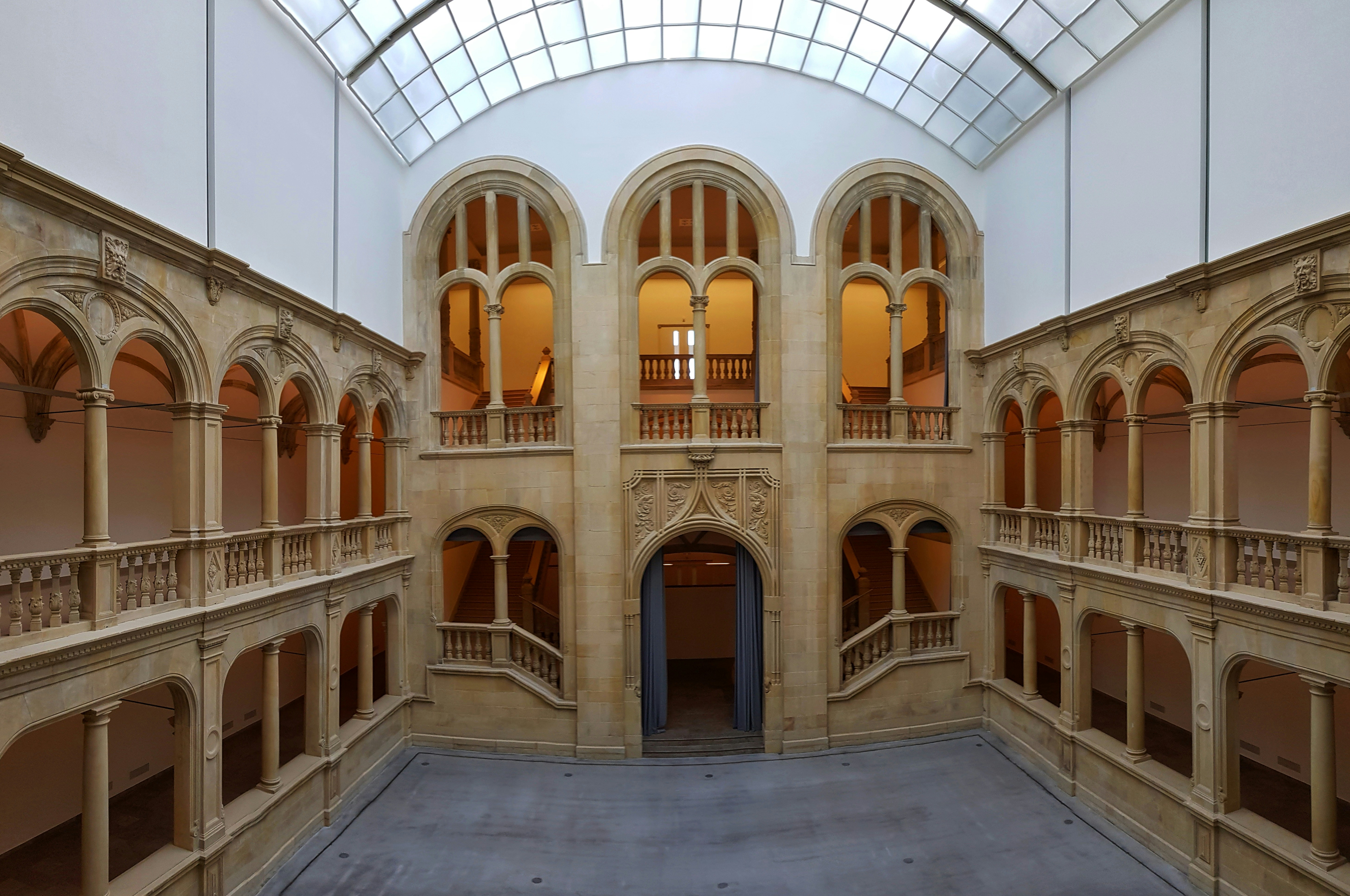
The LWL-Museum für Kunst und Kultur houses collections spanning medieval altarpieces to modern masterworks. Its architecture – a bold contemporary structure joined to a historic building – embodies the city's approach to heritage: respect the past, but don't be imprisoned by it.
Lakeside Escapes
When weather permits, the Aasee draws crowds to its shores. This artificial lake, created in the 1930s, has become the city's recreational heart. Sailboats glide across its surface while joggers circle its perimeter. Students claim patches of grass for impromptu picnics, and families rent pedal boats for lazy afternoon excursions.
The Allwetterzoo, situated near the lake's southern end, reimagines what zoos can be. Weather-protected walkways connect exhibits, ensuring that rain – a frequent companion in Westphalia – needn't interrupt visits. The dolphinarium and tropical house provide year-round attractions, while conservation programs reflect contemporary understanding of zoos' educational and preservation responsibilities.
Rhythms of Student Life
As darkness falls, the Kuhviertel – the "cow quarter" – awakens. This compact neighborhood transforms from quiet residential streets into the pulsing center of nightlife. Bars spill patrons onto sidewalks, live music drifts from basement venues, and conversations in multiple languages overlap in the warm glow of street lamps.
The atmosphere remains refreshingly unpretentious. Unlike larger cities where scenes become stratified and exclusive, here different crowds mix naturally. First-year students share tables with doctoral candidates, locals chat with international visitors, and everyone contributes to the democratic chaos that defines the quarter after dark.
Seasons and Celebrations
December brings the Weihnachtsmarkt, transforming several squares into a constellation of wooden stalls. The scent of Glühwein and roasted almonds hangs in the cold air while shoppers hunt for handcrafted ornaments and warming scarves. Choir performances echo off baroque facades, and for a few weeks, centuries seem to collapse – this could be any winter from the past three hundred years.
The Send, a three-times-yearly fair with carnival rides and festival stalls, draws crowds to an open field near the old town. This tradition, dating back to medieval merchants' gatherings, now serves as pure entertainment, though echoes of its commercial origins remain in the market stalls selling everything from household goods to exotic snacks.
Rebuilding and Remembering
Walk through the reconstructed streets today, and the scale of wartime destruction becomes almost impossible to imagine. Over ninety percent of the historic center was obliterated during bombing raids. The decision to rebuild according to original plans, rather than embrace modernist urban planning trends of the era, proved controversial at the time. Now, that choice feels vindicated – the city maintained its identity through faithful reconstruction.
Yet not everything was replicated exactly. Modern buildings stand interspersed among reconstructed historical structures, creating what urban theorists call "critical reconstruction" – acknowledging the past while refusing to pretend the intervening trauma never occurred.
The question of authenticity – whether a meticulously rebuilt church "counts" as historical – gets debated by philosophers and tourists alike. But for residents, these discussions miss the point. The buildings matter less than what happens within and around them: the continuation of community life, the daily negotiations between tradition and innovation, the simple act of choosing to stay and rebuild rather than abandon ruins for new cities elsewhere.
Life in this university town moves forward with quiet confidence. Bicycles continue their endless circulation through streets both ancient and modern. Students fill cafes with debate and laughter. Market vendors arrange their produce just as their grandparents did. And through it all, the twin towers of St. Lamberti keep watch, their shadows lengthening across squares where history was made and continues, in smaller ways, to be written daily.
Those seeking a different pace might find themselves drawn westward to Koln, where the Rhine flows through another city that rose from wartime ashes to reclaim its place as a cultural beacon.


 Home
Home Wishlist