
Nürnberg: Where Medieval Walls Meet Modern Spirit
Behind Ancient Walls
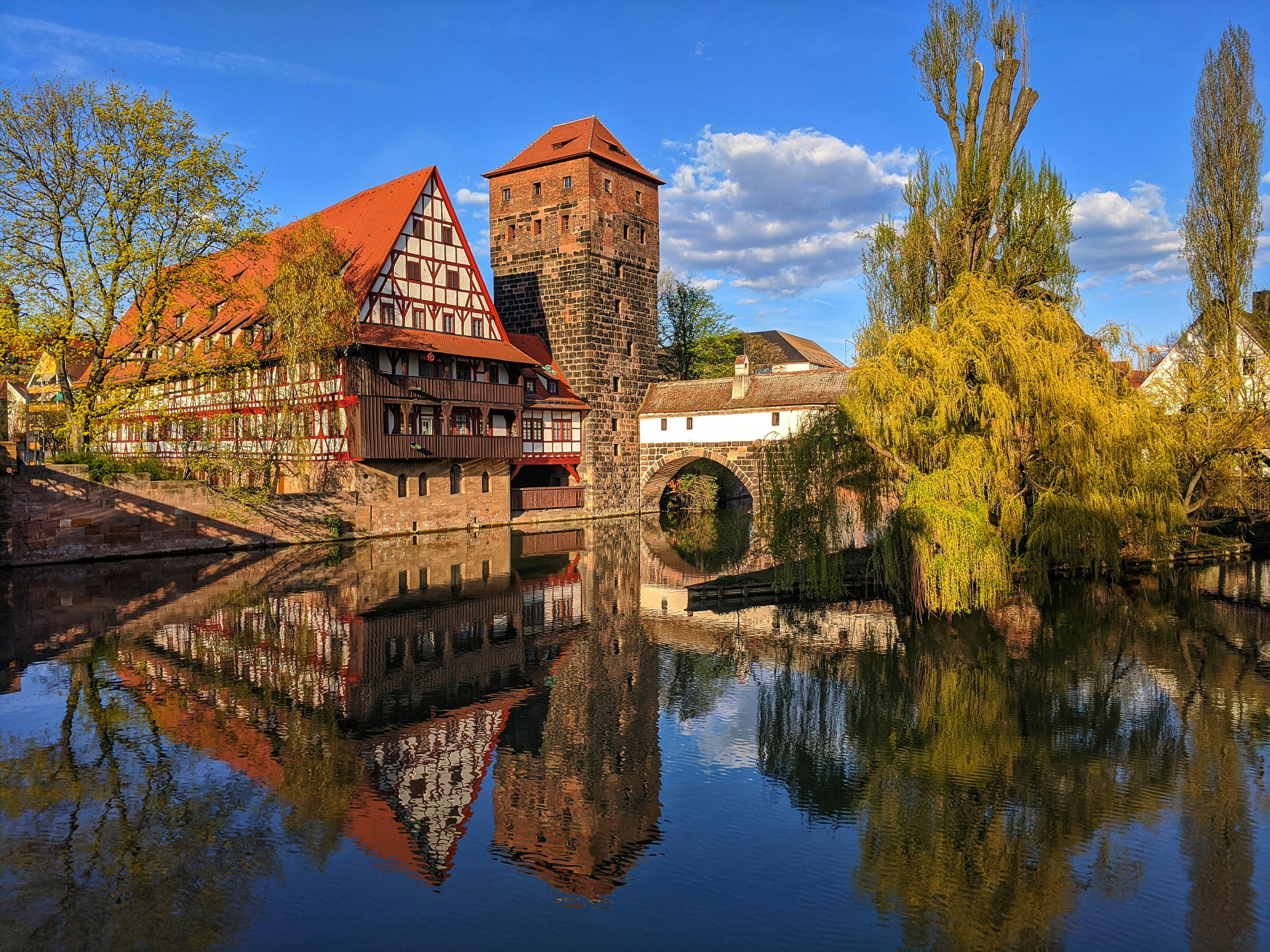
The old town gets encircled by nearly five kilometers of medieval fortifications, their red sandstone towers and ramparts forming one of Europe's most impressive defensive rings. These walls, constructed between the 14th and 16th centuries, have been meticulously restored after near-total destruction during World War II. Walking along the covered walkways, where guards once kept watch, a panorama of terracotta rooftops and church spires unfolds below.
Within this protective embrace, narrow lanes wind past half-timbered houses painted in shades of ochre, cream, and rust. The Handwerkerhof, a recreated medieval craftsmen's courtyard near the main train station, offers a concentrated dose of traditional atmosphere. Here, artisans practice centuries-old trades – glassblowing, pewter casting, leatherworking – their workshops tucked into charming timber-framed buildings that transport visitors back several hundred years.
Things to do in Nurnberg
Imperial Grandeur
Atop a sandstone outcrop overlooking the old town, the Kaiserburg castle dominates the skyline. This imperial fortress, which served as a residence for Holy Roman Emperors, contains layers of architectural history spanning from the 11th to the 16th centuries. The Sinwell Tower, a massive cylindrical structure, provides breathtaking views after a climb up its worn spiral staircase. The Deep Well, plunging nearly 50 meters through solid rock, demonstrates the engineering prowess that allowed this fortress to withstand lengthy sieges.
In the castle's museum, the significance of this location becomes clear. As a free imperial city and the unofficial capital of the Holy Roman Empire, enormous political and economic power was wielded here for centuries. Imperial regalia were stored within these walls, and imperial diets – crucial political assemblies – were regularly convened in the town below.
Artistic Legacy
The shadow of Albrecht Dürer, Germany's most celebrated Renaissance artist, stretches across the centuries. His former home, preserved as a museum since 1828, stands in the upper town near the castle. Within these walls, masterworks were created that revolutionized European art. Engravings, woodcuts, and paintings produced here between 1509 and 1528 captured both technical brilliance and profound psychological depth.
Beyond Dürer, remarkable artistic treasures get housed throughout the city. The Germanisches Nationalmuseum, the largest museum of cultural history in German-speaking countries, contains over 1.3 million objects spanning from prehistoric times to the present. Medieval sculptures, Renaissance paintings, historical musical instruments, and decorative arts fill gallery after gallery, telling the story of German cultural achievement across the millennia.
Shadows of the Past
No honest account can avoid the darkest chapter. Between 1933 and 1938, massive Nazi Party rallies were staged here, exploiting the city's historical significance and imperial legacy for propaganda purposes. The vast parade grounds and monumental structures constructed for these gatherings remain as stark reminders on the former rally grounds. The Documentation Center, built into the unfinished Congress Hall, provides unflinching examination of this period, explaining how democratic institutions collapsed and totalitarianism took hold.
After the war's end, justice was sought where crimes had been celebrated. Between 1945 and 1949, the Nuremberg Trials were conducted in Courtroom 600 of the Palace of Justice, establishing precedents for international law that continue to resonate today. The courthouse, still in active use, now includes a memorial exhibition that documents these landmark proceedings and their lasting impact on concepts of human rights and accountability.
Seasonal Enchantment
As December arrives, transformation occurs in the Hauptmarkt, the main market square. The Christkindlesmarkt, one of the world's oldest and most famous Christmas markets, fills the square with over 180 wooden stalls draped in red-and-white striped cloth. The scent of roasted almonds, mulled wine, and gingerbread permeates the cold air. Local specialties like Lebkuchen (spiced gingerbread) and Zwetschgenmännle (figures made from dried prunes) get sold alongside handcrafted ornaments and toys.
The market tradition stretches back to at least 1628, though Christmas markets likely existed here even earlier. Each year, a local teenager gets chosen to portray the Christkind, opening the market with a prologue delivered from the balcony of the Frauenkirche. The angel-like figure, dressed in white and gold, embodies the innocent wonder that this seasonal gathering seeks to create.
Culinary Traditions
Three small sausages get placed in a crusty roll, mustard gets added, and a local institution gets served. The Nürnberger Rostbratwurst, protected by European law since their recipe and size were first regulated by city ordinance in 1313, remain a source of civic pride. Made from finely ground pork and seasoned with marjoram, these finger-sized sausages get grilled over beechwood fires in traditional restaurants throughout the old town.
Lebkuchen, the city's other culinary claim to fame, have been baked here since at least the 14th century. These spiced honey cakes, often covered in dark chocolate or sugar glaze, were originally created by monks. Today, several traditional bakeries guard their secret recipes while producing millions of these treats annually, particularly during the Christmas season.
Innovation and Industry
While medieval charm draws visitors, modern innovation drives the local economy. A thriving technology sector has developed here, with particular strength in communications, automation, and medical technology. The university, founded in 1972, has grown into a major research institution with over 25,000 students. Partnerships between academic researchers and local companies have fostered a culture of innovation that balances respect for tradition with enthusiasm for progress.
Transportation infrastructure connects this Bavarian hub to destinations across Europe. The central location within Germany and excellent rail connections make it an ideal base for exploring the wider region. From here, journeys to other fascinating destinations become easily manageable – Heidelberg, with its romantic castle ruins and historic university, lies just a comfortable train ride away through the scenic Franconian countryside.
This city of contradictions – where imperial glory and Nazi infamy both left their marks, where medieval walls embrace cutting-edge technology, where gingerbread traditions coexist with research laboratories – offers no simple narratives. Instead, complexity and authenticity define the experience. History gets confronted honestly, traditions get maintained proudly, and the future gets built thoughtfully. The result feels neither frozen in time nor disconnected from the past, but rather like a living community that understands where it came from and deliberately chooses where it wants to go.




 Home
Home Wishlist