
Swindon: Where Industrial Heritage Meets Modern Ambition
The Railway Revolution
The town's destiny was forever altered in 1841 when the Great Western Railway established its locomotive works here. What had been a modest market settlement was transformed almost overnight into a powerhouse of Victorian engineering. The decision, made by the legendary engineer Isambard Kingdom Brunel, proved momentous not just for the railway company but for thousands who would build their lives around the works.
By the late 19th century, the railway works had grown into one of the largest employers in Britain. Locomotives were designed, built, and maintained within sprawling workshops that covered over 300 acres. The famous Castle and King class engines – masterpieces of steam engineering – were constructed by skilled craftsmen whose expertise had been passed down through families for generations. The sound of hammers on steel, the hiss of steam, and the clatter of machinery became the town's heartbeat.
Things to do in Swindon
A Company Town
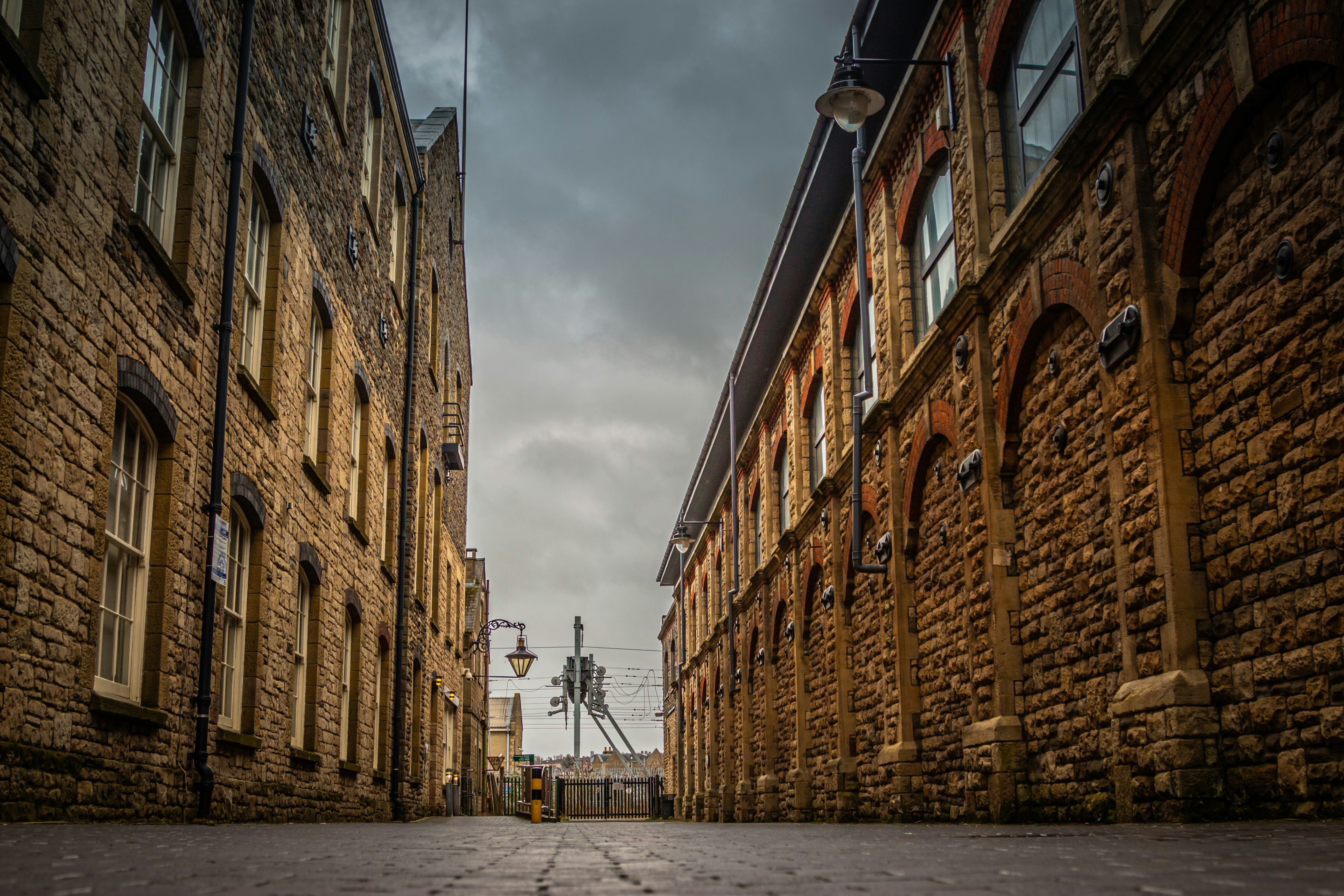
The railway company didn't just provide employment; it shaped every aspect of community life. An entire village was constructed to house workers – neat rows of terraced houses built from distinctive cream-colored stone. Streets were laid out in a grid pattern, practical and efficient, much like the locomotives produced nearby. This "Railway Village," as it came to be known, included its own church, hospital, and even a mechanics' institute where workers could improve their education.
The works also established a medical fund, one of the earliest healthcare schemes in Britain. Workers contributed a small portion of their wages in return for medical care when needed. This innovative approach to worker welfare was years ahead of its time and became a model studied throughout industrial Britain.
The Golden Age
The decades following World War II represented perhaps the pinnacle of the town's railway heritage. Post-war reconstruction demanded locomotives and rolling stock in unprecedented quantities. Employment at the works reached its zenith, with over 14,000 workers clocking in each day. The town prospered, its high street bustling with shops supported by steady wages and a sense of security that came from working for a nationalized industry.
But this golden age would prove fleeting. The diesel revolution of the 1950s and 60s rendered steam locomotives obsolete. Despite adapting to build diesel engines and even venturing into manufacturing, the works faced an uncertain future. When British Rail closed the facility in 1986, it marked the end of 145 years of locomotive production and left the town facing its greatest challenge.
Reinvention and Recovery
The closure could have been catastrophic, but instead became a catalyst for transformation. The town's location – roughly equidistant between London and Bristol, with excellent motorway connections – proved attractive to companies seeking alternatives to expensive metropolitan bases. Tax incentives and enterprise zones were established to encourage business relocation and startup activity.
Major corporations took notice. Honda established its UK manufacturing headquarters here in the mid-1980s, bringing Japanese manufacturing expertise and thousands of jobs. Financial services companies, drawn by lower operating costs and skilled workforce, opened regional offices. Technology firms, retailers, and logistics companies followed. The old railway works site itself was redeveloped into retail parks, business centers, and housing, physical proof that the past could be honored while building toward the future.
Cultural Rebirth
Alongside economic regeneration came investment in culture and heritage. The STEAM Museum, opened in 2000 within the restored railway works, tells the story of the town's industrial heyday through preserved locomotives, interactive exhibits, and oral histories recorded by former workers. Walking through the museum, visitors can almost hear the clang of hammers and feel the heat from the forges.
The Railway Village, carefully preserved, now stands as a heritage site where visitors can tour workers' cottages restored to their Victorian appearance. The Mechanics' Institute has been converted into a museum and event space, its reading room and library preserved much as they would have appeared to workers seeking self-improvement a century ago.
Contemporary cultural facilities have also flourished. The Wyvern Theatre hosts touring productions and local performances. The Arts Centre supports emerging artists and community arts projects. These institutions reflect a community that values creativity alongside commerce, determined to be more than just a commuter town or business park.
Green Spaces and Modern Living
Despite rapid growth, considerable effort has been made to maintain accessible green space. Coate Water Country Park, with its 70-acre lake and surrounding meadows, offers refuge from urban life. The park holds particular significance as the childhood playground of Richard Jefferies, the Victorian nature writer whose lyrical descriptions of Wiltshire countryside remain beloved today.
The town's expansion has been managed through careful planning, with new residential developments required to include parks, play areas, and community facilities. Cycle paths and walking routes have been integrated into the urban fabric, recognizing that quality of life depends on more than just employment opportunities.
Challenges and Character
Not everything about rapid transformation has been positive. Some criticize the town for lacking a cohesive identity, its architecture a patchwork of Victorian terraces, post-war estates, and modern developments that don't always speak to each other. The town center has struggled, like many British high streets, with retail moving to out-of-town shopping centers and online platforms.
Yet there remains something authentic about the place – a lack of pretension, perhaps, or a practical mindset inherited from generations of engineers and craftsmen. The town doesn't try to be something it isn't. Its appeal lies not in ancient monuments or chocolate-box prettiness, but in its role as a working town that has adapted to survive.
Looking Forward
Recent years have brought renewed challenges. Economic uncertainties, the closure of Honda's manufacturing plant in 2021, and changing work patterns post-pandemic have all tested the town's resilience. But if history teaches anything, it's that this community has weathered upheaval before.
New opportunities continue to emerge. The town has been designated for significant housing growth, with tens of thousands of new homes planned over coming decades. Investment in transport infrastructure, including potential improvements to rail connections, aims to enhance connectivity. The focus on attracting technology companies and supporting small businesses reflects an understanding that economic success depends on diversification.
For visitors passing through on the M4 corridor, the town might seem just another waypoint between more famous destinations. But beneath the roundabouts and retail parks beats the heart of a community forged in fire and steam, a place that understands both the cost of change and the necessity of adaptation. While travelers might be drawn to the historic streets of Bath or other celebrated destinations, there's value in understanding the quieter stories – the places where ordinary people built extraordinary things and continue to forge their futures with the same determination their forebears brought to the railway works all those years ago.


 Home
Home Wishlist